
Resources
Our Certificates
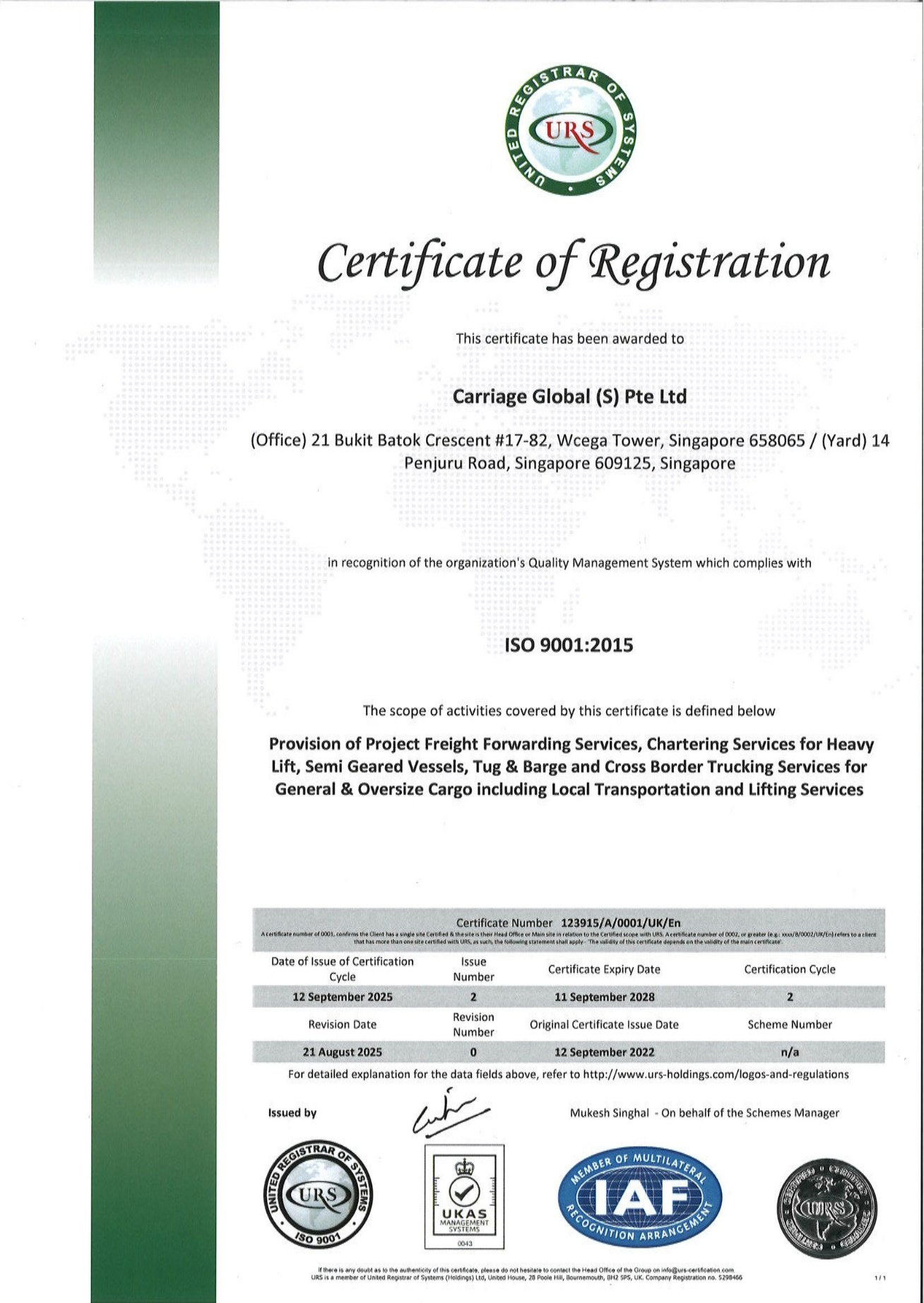
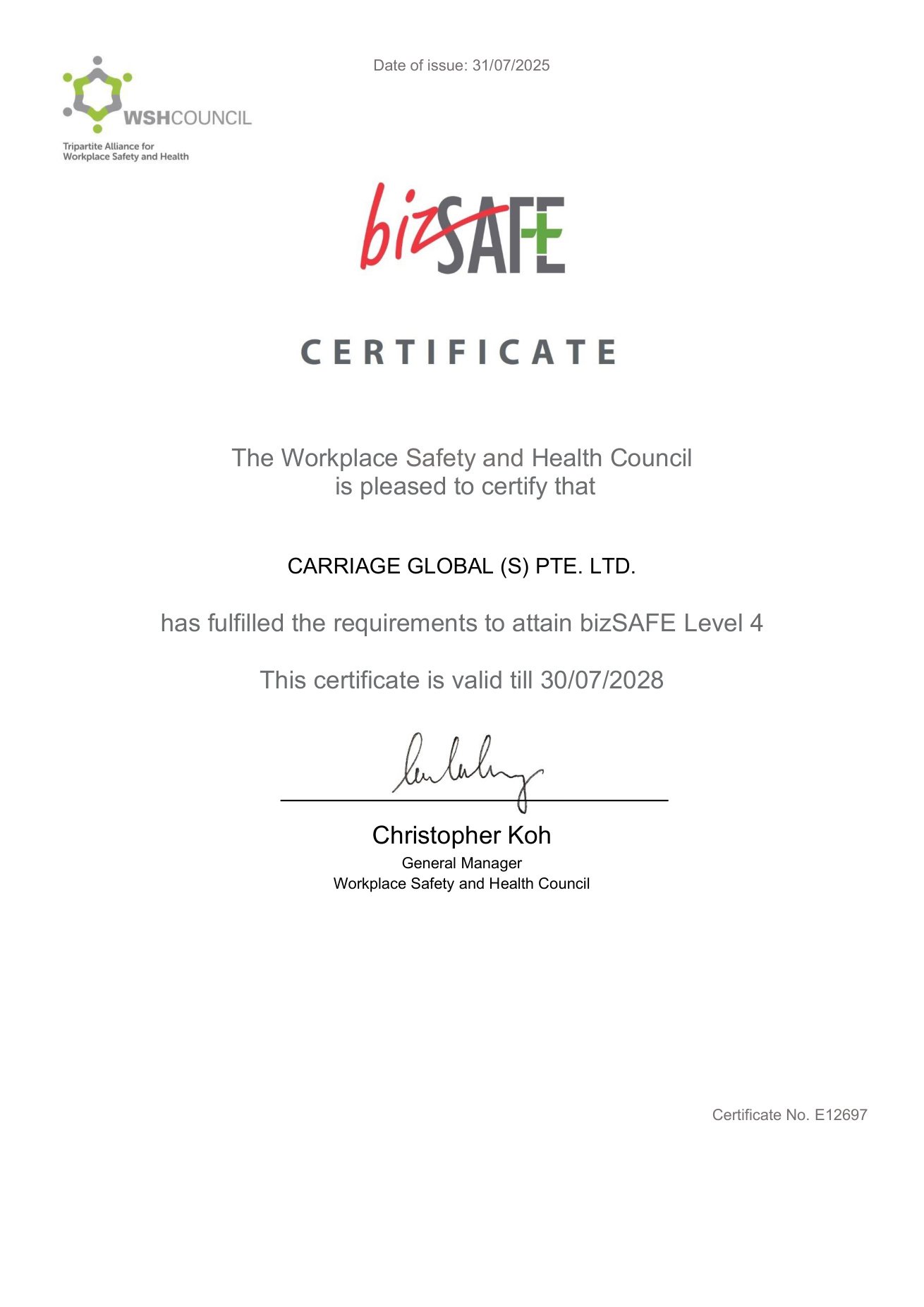
View and download our current ISO 9001:2015, bizSAFE Level 4 and WCA Project Network certificates below.

CBM and Freight Ton
Understanding CBM (Cubic Meter) and Freight Ton is essential in international shipping and logistics, especially for breakbulk and project cargo that does not move in a standard container. These two measurements are what carriers use to calculate shipping costs, make the best use of available cargo space, and plan transportation accurately.
What is CBM (Cubic Meter)?
CBM is the standard unit shipping and freight companies use to measure how much space a shipment takes up. It is calculated by multiplying a shipment's three dimensions.
CBM = Length (m) × Width (m) × Height (m)
For example, a crate measuring 2 m long, 1.5 m wide and 1 m high:
CBM = 2 m × 1.5 m × 1 m = 3 cubic meters
All dimensions must be converted to meters before calculating CBM. If your measurements are in centimeters or feet, convert them to meters first.
Understanding Freight Ton
A freight ton is a unit used to calculate cargo weight for shipping prices and load limits. Two common tonnage measurements apply:
- Gross Weight Ton (Short Ton): 2,000 lbs, widely used in the United States. Gross Weight Ton = Weight (lbs) ÷ 2,000.
- Metric Weight Ton: 2,204.62 lbs (1,000 kg), used in most other parts of the world. Metric Weight Ton = Weight (kg) ÷ 1,000.
For a shipment weighing 5,000 lbs (2,268 kg):
- Gross Weight Ton = 5,000 lbs ÷ 2,000 = 2.5 short tons
- Metric Weight Ton = 2,268 kg ÷ 1,000 = 2.268 metric tons
How CBM and Freight Ton Work Together
Freight Ton measures weight, while CBM measures volume, and carriers weigh both to make the best use of available space and stay within weight limits. For breakbulk cargo, the shipping cost is usually based on whichever produces the higher revenue for the carrier: the cargo's actual weight, or its volume converted to a ton-equivalent. Knowing both figures in advance lets you plan a shipment's cost with confidence before it reaches the port.
Incoterms, Insurance and Chargeable Weight
Eleven standardized trade terms defining exactly where the seller’s responsibility for cost, risk and delivery ends and the buyer’s begins.
Any mode of transport
Sea & inland waterway only
These two covers are often confused, but they protect different things and different parties — one is the carrier’s own capped liability, the other is a policy you arrange yourself for the goods.
Freight Service Liability Insurance
- Covers the carrier’s own, legally limited liability
- Applies only to loss or damage while cargo is in the carrier’s care
- Capped by weight or a fixed sum per package
- Set by convention — Hague-Visby (sea), CMR (road)
- The cap is fixed by that convention, not by what the cargo is actually worth
Cargo Insurance
- Also called marine cargo insurance
- A separate policy the cargo owner takes out, not the carrier
- Covers the full declared value, not a capped amount
- Includes risks the carrier isn’t liable for at all — piracy, general average
- Also covers damage from circumstances outside the carrier’s control
Air freight is charged on whichever is greater: actual weight, or volumetric weight. Drag the crate’s dimensions and see which one wins.
Volumetric weight = (L × W × H) ÷ 6,000
Terms, Conduct and Policies
Our governing terms and company policies. Each opens as a PDF you can read in full or download.
- CGS General Terms and Conditions The standard terms and conditions governing our freight and logistics services.
- Code of Conduct Our standards for ethical, professional conduct in daily operations.
- Alcohol and Drug Policy Our workplace policy on alcohol and drug use.
- Environmental Policy Statement Our commitment to environmentally responsible operations.
Tell us what needs to move
Send the dimensions and the deadline. We will come back with the mode, the route and what it costs.